The GCAN-208 series is an industrial CAN bus fiber optic repeater designed to extend CAN communication distances and provide electrical isolation between network segments. It transparently converts CAN bus signals into optical signals and restores them at the receiving end, maintaining reliable data transmission over fiber optic links.
Supporting transmission distances of up to 20 km with single-mode fiber, the GCAN-208 series is suitable for industrial environments with long-distance communication requirements, electromagnetic interference, and ground potential differences. It supports CANopen, SAE J1939, DeviceNet, NMEA 2000, and other CAN-based protocols.
Three models are available to accommodate different network architectures: GCAN-208-1 for dual-channel CAN extension, GCAN-208-2 for fiber-optic cascading, and GCAN-208-2 F for redundant fiber-optic ring networks.
Available Configurations
- Fiber Connector: SC / ST / FC
- Fiber Type: Single-mode / Multimode
- Fiber Configuration: Single-fiber / Dual-fiber
- Fiber Wavelength: 1310 nm / 1510 nm
Before Ordering,please specify the required model, fiber connector type, fiber transmission mode, and single-fiber or dual-fiber configuration when placing an order.
For network design assistance, please provide the CAN network topology, required transmission distance, and CAN baud rate.
Transparent CAN-to-fiber conversion for long-distance, isolated CAN networking.
CAN to Fiber Optic Converter
Level 1 Transparent Repeater: Lossless Raw CAN Streaming
Designed for long-distance networking and EMI/lightning protection
1x Fiber (SC/ST/FC) and 2x CAN 2.0A/2.0B interface
3000V DC isolation on CAN side
Operating Temp. at -40°C to +85°C
Supports point-to-point, daisy-chain, star, and redundant ring topologies
1. Up to 20 km Fiber Transmission
Extend CAN bus communication over distances of up to 20 km using single-mode fiber, suitable for distributed industrial systems and remote equipment.
2. Complete Electrical Isolation
Fiber-optic communication provides galvanic isolation between network segments, preventing electromagnetic interference, ground loops, and lightning-related disturbances from propagating through the link.
3. 3000 V CAN Isolation
Each CAN interface features 3000 V DC isolation withstand voltage, helping protect connected equipment against electrical disturbances.
4. Transparent CAN Data Repeating
Converts CAN signals to optical signals and back without changing the original CAN communication protocol or application data.
5. Wide CAN Baud Rate Support
Supports CAN communication speeds from 5 kbps to 1 Mbps, with DIP switch configuration and automatic baud-rate detection.
6. Broad CAN Protocol Compatibility
Supports CAN 2.0A/B and CAN-based protocols including CANopen, SAE J1939, DeviceNet, and NMEA 2000.
7. Flexible Network Topologies
Supports point-to-point, chain, star, tree, and ring configurations, allowing flexible expansion of industrial CAN networks.
8. High-Speed Data Forwarding
Supports up to 8,000 standard CAN frames per second per channel, with approximately 30 μs forwarding delay.
9. Industrial-Grade Operation
Operates from -40°C to +85°C, supports 9–36 V DC power input, and offers wall or DIN-rail mounting options.
Find Your Gateway Solution by Application
◆ Application 1: Long-Distance CAN Bus Communication
💡 How it works:
- Role: Acts as a fiber-optic repeater to extend CAN communication between two distant locations.
- Connection: Two GCAN-208-1 modules work as a pair. Each module connects to two local CAN bus channels and communicates with the other through fiber optics.
- Data Processing: Transparently converts CAN electrical signals into optical signals and restores them to CAN signals at the receiving end, without modifying CAN frames.
- Signal Transmission: Transmits CAN data over single-mode fiber for distances of up to 20 km.
◆ Application 2: Multi-Segment CAN Network Extension
💡 How it works:
- Role: Extends CAN communication across multiple network segments in large industrial facilities.
- Connection: GCAN-208-1 modules serve as the endpoints, while multiple GCAN-208-2 modules are connected in sequence through their fiber-optic interfaces.
- Data Processing: Transparently converts CAN signals and optical signals at each connection point, allowing CAN communication to pass through the fiber-optic links.
- Signal Transmission: Carries CAN data between separated network segments through a cascaded fiber-optic network.
◆ Application 3: Redundant CAN Fiber-Optic Ring Network
💡 How it works:
- Role: Builds a redundant fiber-optic communication ring for distributed CAN networks.
- Connection: Multiple GCAN-208-2 F modules connect to local CAN bus segments and link with neighboring modules through their two fiber-optic interfaces.
- Data Processing: Transparently converts CAN electrical signals into optical signals and restores incoming optical signals to CAN signals.
- Signal Transmission: Transmits CAN data through the fiber-optic ring. If one node becomes disconnected, communication between the remaining nodes is not affected.
Semantic Processing Tier and Core Capability & Target Models of Gateways
Gateway Selection Guide: Semantic Depth & Master/Slave Capability
| Model | Semantic Processing Level | CAN-Side Role | Can it act as a Master? | Sub-models / Programmability | Interfaces | Application | |
| GCAN-204 | Register mapping (Not transparent) | Fixed Modbus RTU Slave | No. Modbus RTU Slave only. | Single fixed firmware. Free config software, zero programming. | 1× RS485, 1× CAN 2.0A/B |
PLC/HMI (Modbus master) reading CAN sensors; legacy retrofits. | |
| GCAN-205 | Register mapping (Not transparent). | Fixed Modbus TCP Slave | No. Modbus TCP Slave only. | Single fixed firmware. Free config software. | 1× Ethernet, 1× CAN 2.0A/B |
SCADA/HMI reading CAN devices over Ethernet. | |
| GCAN-208 | Pure physical-layer passthrough. | No protocol role | No. No protocol stack. | Sub-models: 208-1, 208-2, 208-2F. | 1–2× Fiber, 1–2× CAN 2.0A/B |
Long-distance CAN extension, high EMI isolation. | |
|
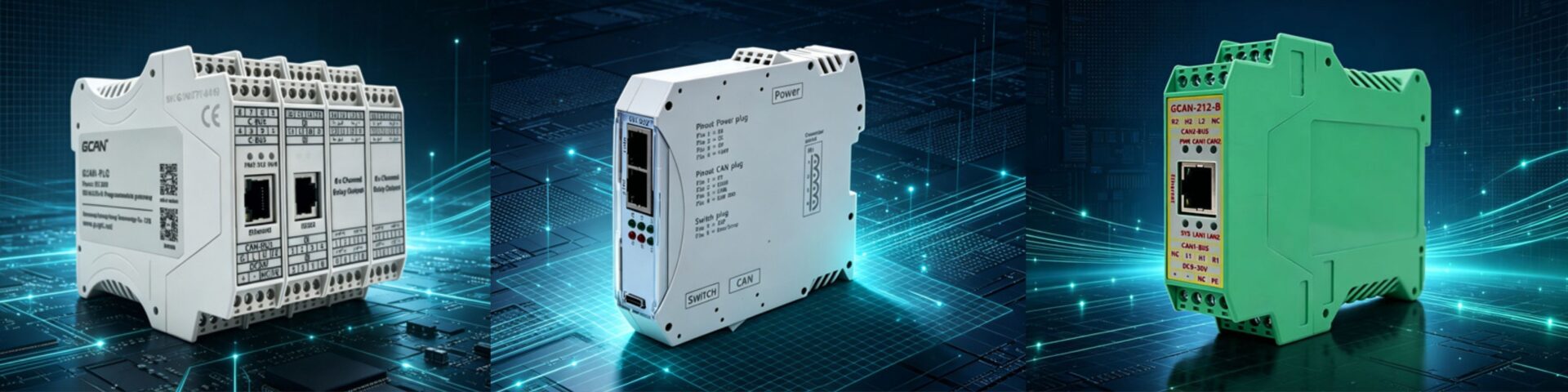
Socket-level transparent transmission. | No protocol role | No. Data pipe only. | Single unit. Can work in pairs as a wireless CAN repeater. | 2× CAN, 1× Ethernet, 1× WiFi |
Wireless CAN access, mobile debugging. | |
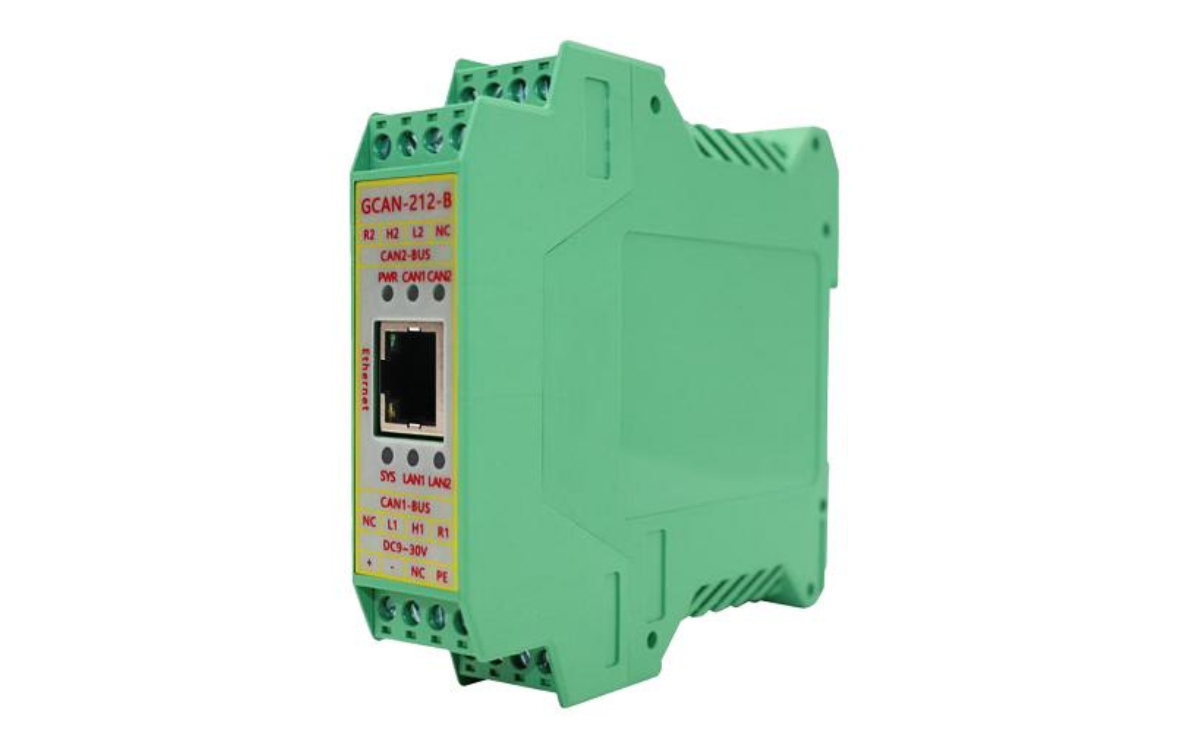
| GCAN-212B | Socket-level transparent transmission. | No protocol role | No. Data pipe only. | Single unit (DIN-rail). | 2× CAN, 1× Ethernet |
Dual-channel CAN to Ethernet inside cabinets. | |
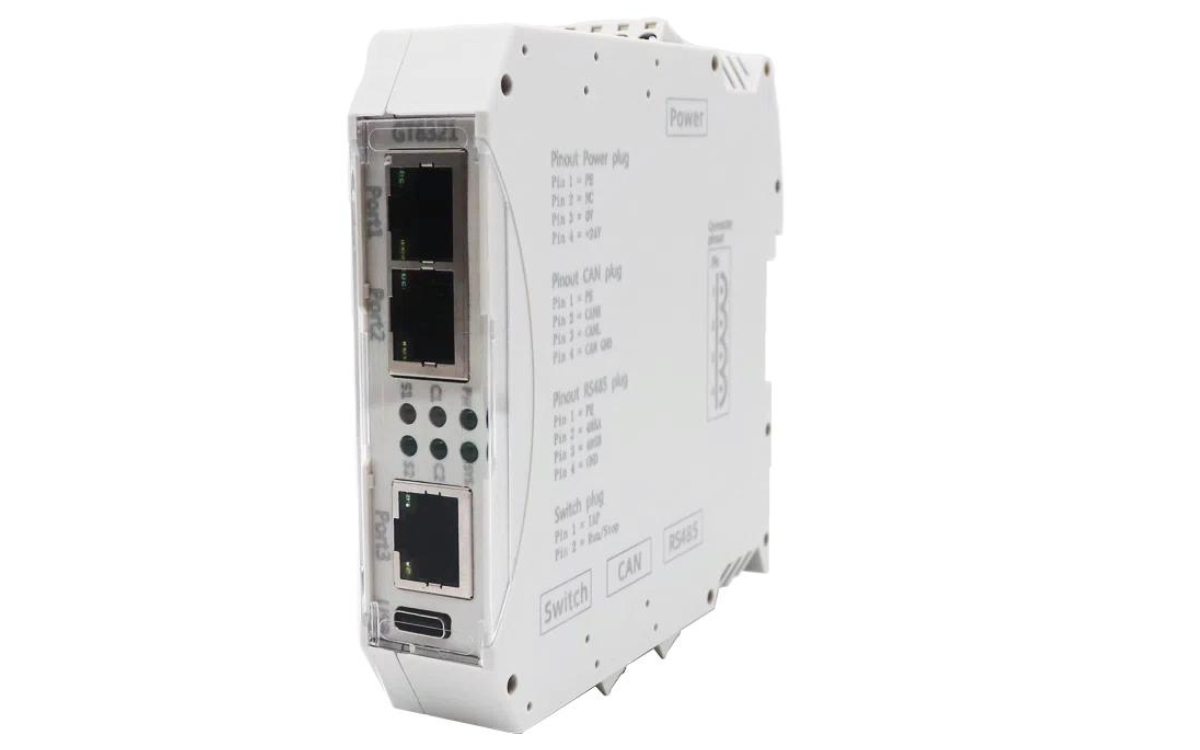
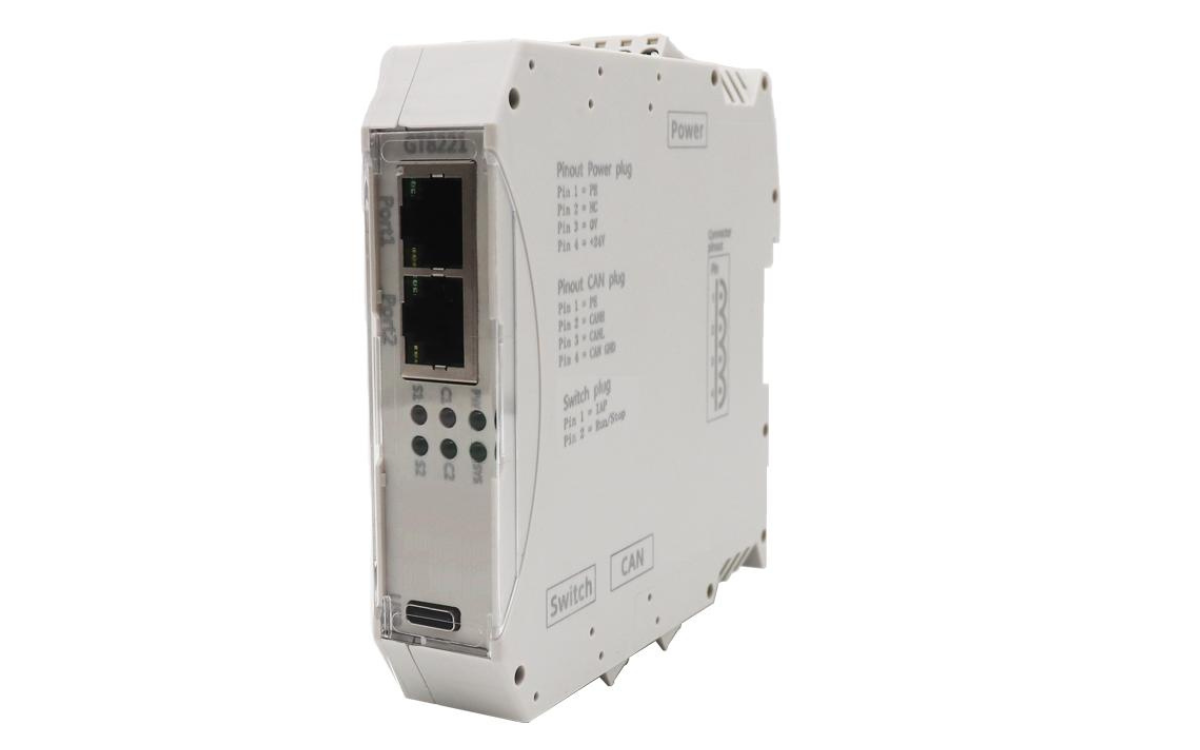
| GCAN-GT-8221 | Splits by sub-model: | EtherCAT Slave → CAN: |
|
Sub-models: -CAN, -COM. Fixed firmware. | 2× EtherCAT (daisy-chain), 1× CAN |
EtherCAT PLC integrating existing CANopen slave devices. | |
| • -CAN: Raw passthrough. | • -CAN: Passthrough | ||||||
| • -COM: CANopen slave stack (Semantic parsing). | • -COM: CANopen Slave | ||||||
| GCAN-GT-8321 | Splits by sub-model (Most comprehensive): | Profinet Slave → CAN: | Profinet side: No. | Sub-models: -CAN, -COM, -COS, -MRTUM, -MRTUS, -MTCPS, -PROG. | 2× Profinet, 1× CAN, 1× RS485, 1× Ethernet (varies) |
Siemens PLC integrating CANopen drives; active CANopen network management. | |
| • -CAN: Raw passthrough. | • -CAN: Passthrough | CAN side: NO | |||||
| • -COM: CANopen Slave. | • -COM: CANopen Slave | CAN side: NO | |||||
| • -COS: CANopen Master (NMT, node monitoring). | • -COS: CANopen Master | CAN side: -COS YES | |||||
| • -PROG: Programmable. | User-defined (Master/Slave configurable) | Yes (Configurable via program) | |||||
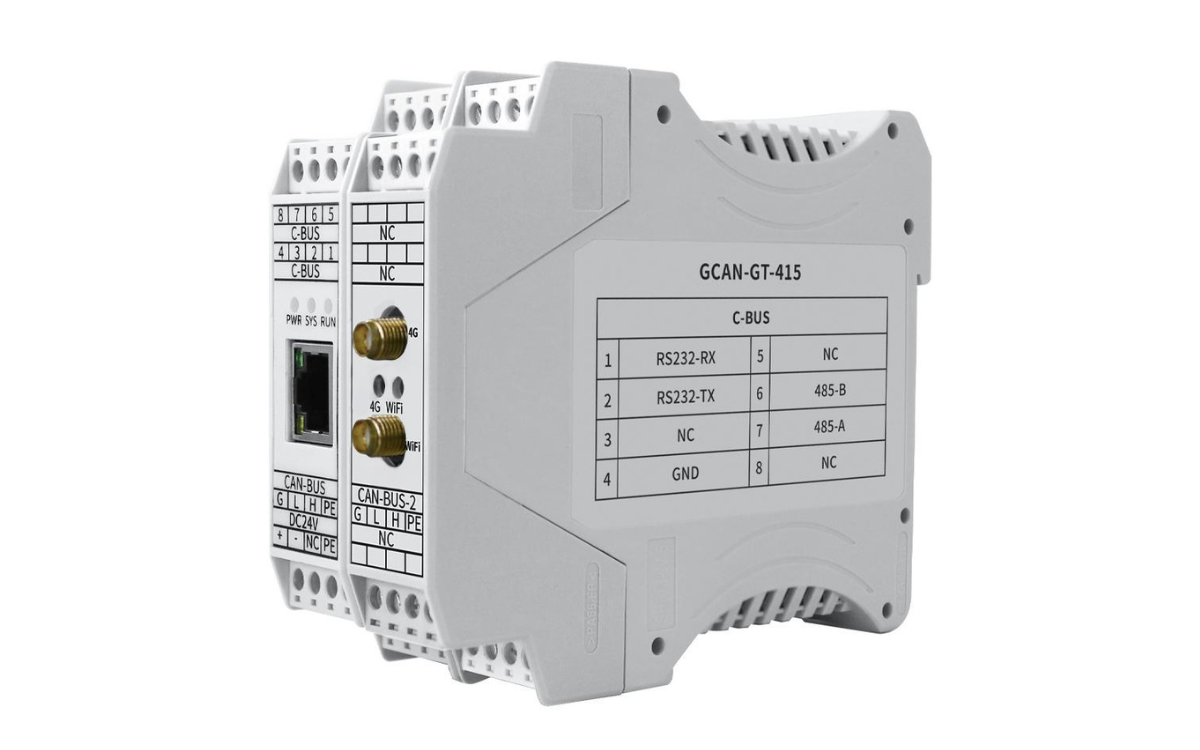
| GCAN-GT-415 | Full programmable semantic processing. | Configurable via program | Yes, fully configurable. CANopen & Modbus Master/Slave. | No fixed sub-models. Programmable via OpenPCS (IEC 61131-3). | 2× CAN, Ethernet, RS485, RS232, 4G, WiFi | Multi-protocol mixing, non-standard logic, remote upload (acts as a mini-PLC). |
Applications & Technical Resources
Discover fiber-optic solutions for extending CAN communication over long distances in industrial environments.
Related Topic: #CAN Bus Fiber Optic Communication
1 Related ArticlesRelated Topic: #CAN Bus & CAN FD
7 Related Articles
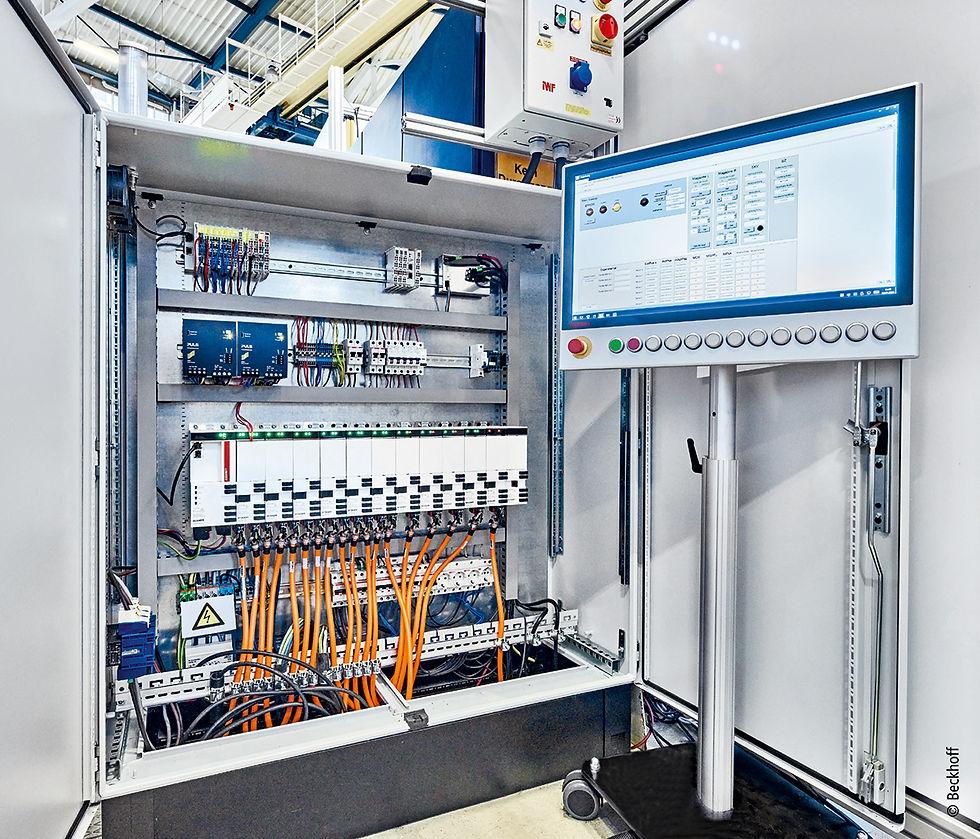
GCAN-212B Application: Ethernet-Based CAN Bus Diagnosis and Testing
Use the GCAN-212B to connect a PC-based diagnostic application to a CAN network over Ethernet. Monitor CAN traffic, transmit test messages, and analyze communication responses.
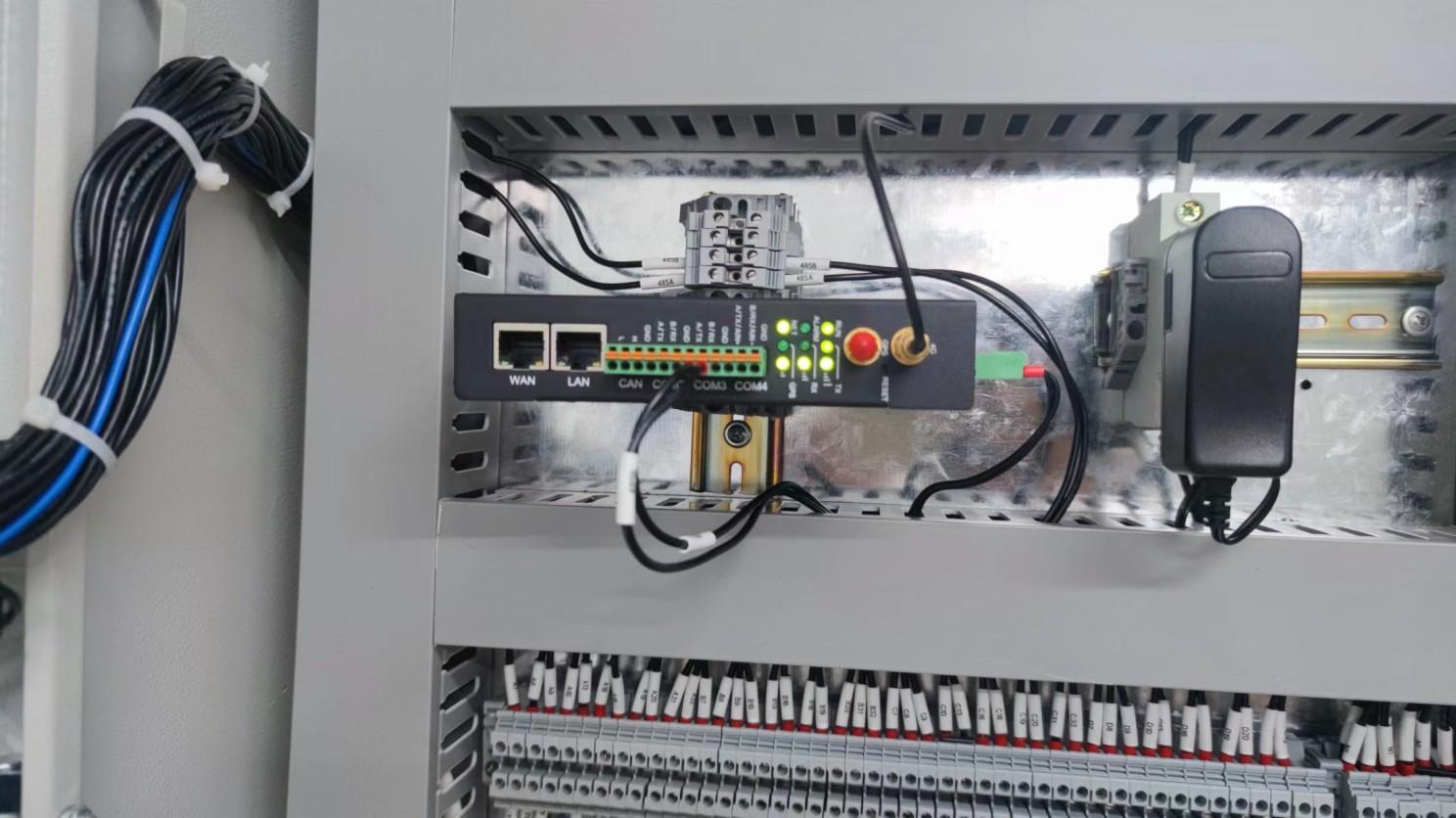
GCAN-212B Application: Ethernet-Based CAN Data Acquisition
Connect CAN field devices to an Ethernet-based PC using the GCAN-212B. Collect, monitor, and record CAN data through TCP or UDP Socket communication.
GCAN-211 Application: Wireless CAN Bus Monitoring & Data Acquisition
Wireless CAN Bus Monitoring · WiFi Connectivity · 2-Channel CAN · TCP/UDP Communication · Remote CAN Data Acquisition
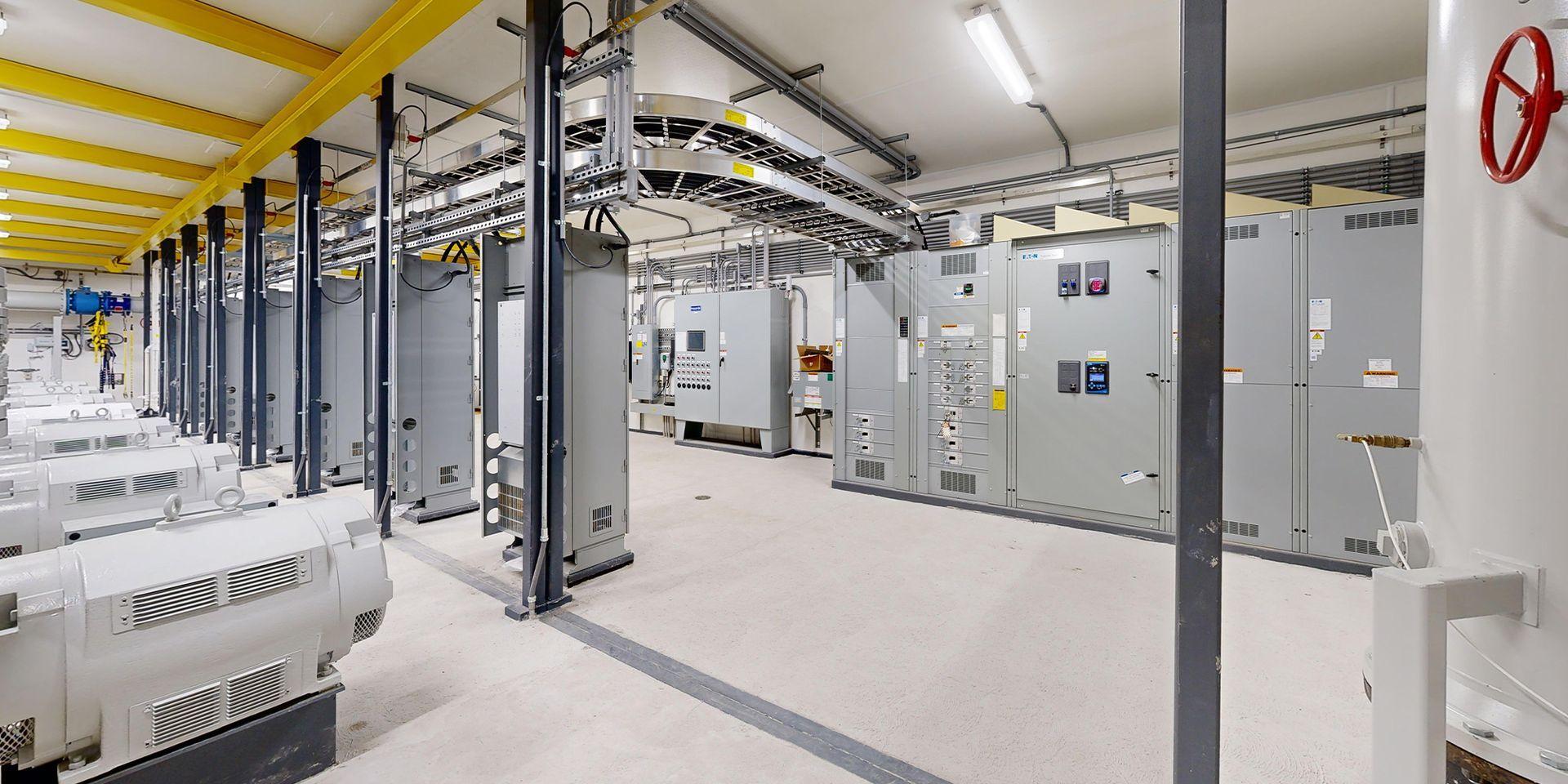
GCAN-208 Application: Long-Distance CAN Communication
Long-Distance CAN Communication · GCAN-208-1 Fiber Optic Repeater · Up to 20 km · CAN 2.0A/B · Electrical Isolation · Industrial Applications
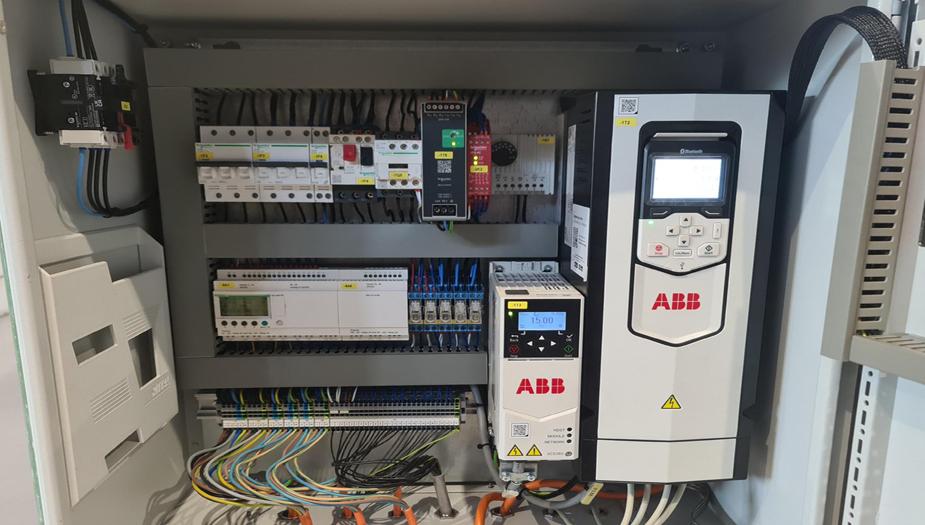
GCAN-205 Application: Modbus TCP to CAN Command Transmission
PLC-to-CAN Command Transmission · GCAN-205 Modbus TCP-to-CAN Gateway · Modbus TCP Slave · CAN 2.0A/B · Triggered and Cyclic Transmission
GCAN-205 Application: CAN Data Acquisition via Modbus TCP
CAN Data Acquisition via Modbus TCP · GCAN-205 Modbus TCP-to-CAN Gateway · PLC Integration · CAN 2.0A/B · Configurable Register Mapping
USBCAN-II C Application: Dual-Channel CAN Network Monitoring
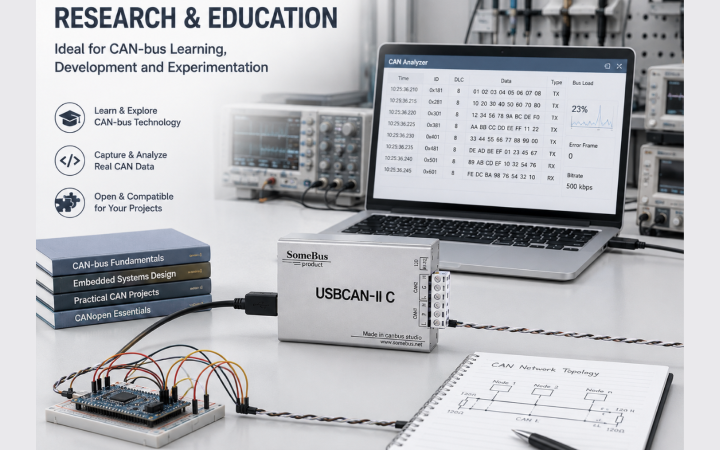
2-Channel CAN Monitoring · Independent Bus Diagnostics · CAN 2.0A/B · Real-Time Frame Capture · USBCAN-II C
GCAN-208 CAN-to-Fiber Converter: Network Planning, Setup & Troubleshooting Guide
Q Why should I choose a fiber converter over a traditional CAN repeater? ▼
- Traditional CAN repeaters only amplify electrical signals, meaning they still suffer from distance limits and remain vulnerable to electromagnetic interference.
- The GCAN-208 converts electrical signals into light, completely breaking the physical electrical connection.
- This provides absolute galvanic isolation, ensuring zero ground loop issues, complete lightning protection, and communication distances up to 20km.
Q In what scenarios is a CAN-to-Fiber converter absolutely necessary? ▼
- Standard copper networks fail in environments with severe electrical noise or significant ground potential differences.
- The GCAN-208 is essential for connecting systems across different buildings, linking high-voltage areas like wind turbines or energy storage systems, and long-distance distributed control across offshore sites.
- It guarantees data integrity where traditional copper cables would inevitably fail or cause equipment damage.
Q Does using fiber optics make the CAN network more complex to maintain? ▼
- Industrial fiber systems are highly reliable and actually reduce long-term maintenance costs.
- The GCAN-208 uses standard connectors for simple plug-and-play operation and provides built-in indicator lights for real-time diagnostics.
- Once installed, fiber optic cables are immune to corrosion and lightning strikes, drastically lowering the risk of sudden network outages compared to exposed copper cables.
Q Can the GCAN-208 handle different CAN baud rates on the same network? ▼
- Yes, it is designed to seamlessly bridge heterogeneous networks.
- The GCAN-208 supports independent baud rate configuration for each CAN channel (from 5Kbps to 1Mbps).
- This allows you to perfectly integrate legacy low-speed devices with modern high-speed control systems without complex reprogramming.
Q What is the maximum communication distance of the GCAN-208? ▼
- The device can extend CAN bus communication up to 20km over optical fiber.
- Because fiber optics are immune to electrical resistance, this distance is completely independent of your CAN bus baud rate.
- This far exceeds the typical 1km limit of copper twisted-pair cables, enabling massive geographic expansion.
Q Can I connect multiple GCAN-208 units together for a larger network? ▼
- Yes. The GCAN-208 series is designed for extreme networking flexibility.
- It natively supports point-to-point, daisy-chain (cascading), star, tree, and redundant ring topologies.
- For ring networks, we recommend the GCAN-208-2F model, which ensures zero downtime if a single fiber link breaks.
Q How do I configure the CAN baud rate? ▼
- You have two flexible options depending on your project requirements.
- You can use the internal DIP switches to manually set standard baud rates, or simply press the reset button for 3 seconds to trigger the automatic baud rate detection function.
- This dual method ensures quick deployment even if the existing bus speed is unknown.
Q Does the GCAN-208 require an external 120Ω terminal resistor? ▼
- No, the device features built-in 120Ω terminal resistors.
- You can easily enable or disable them using the DIP switches located between the CAN terminals.
- This simplifies field wiring and ensures stable signal reflection elimination at the end nodes of your CAN bus network.
Q The FIB and CAN indicator lights are not lighting up. What is wrong? ▼
- The FIB and CAN lights only illuminate or flash when there is actual data transmission passing through the converter.
- If they remain completely off during operation, verify that your physical connections (TX/RX crossover) are correct and your baud rates match.
- This design helps engineers quickly distinguish between a lack of data flow and a physical layer disconnection.