🔵 Overview
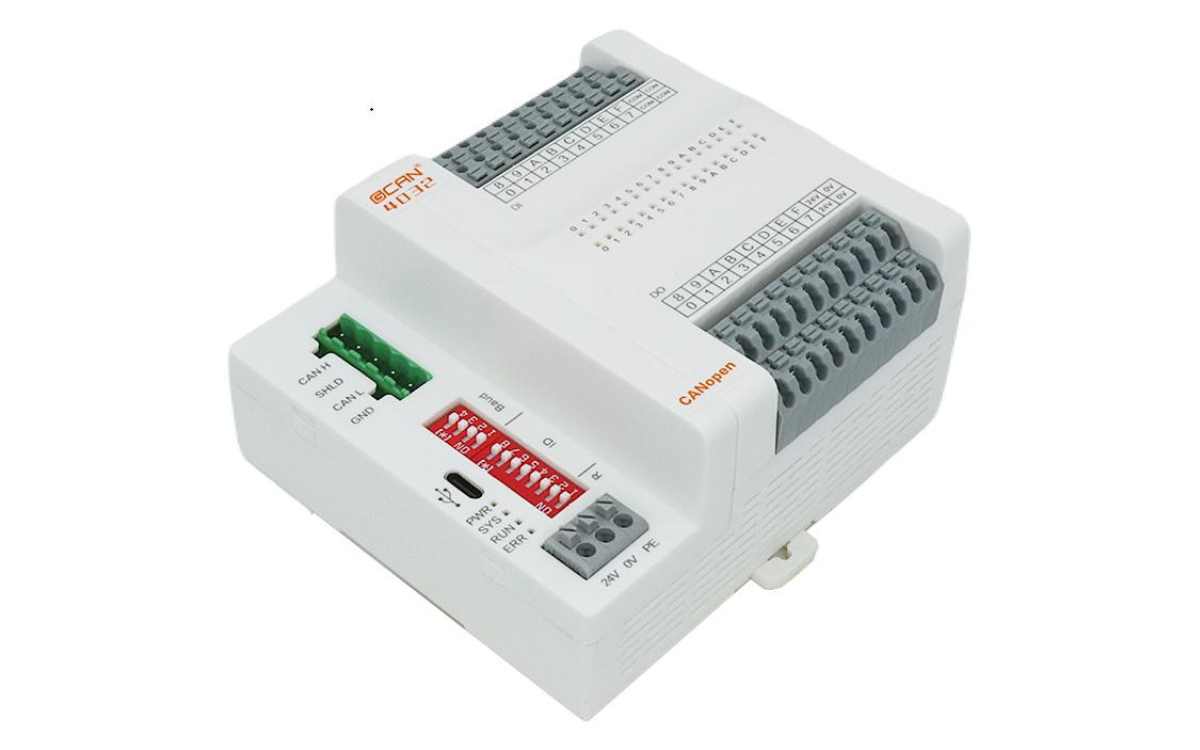
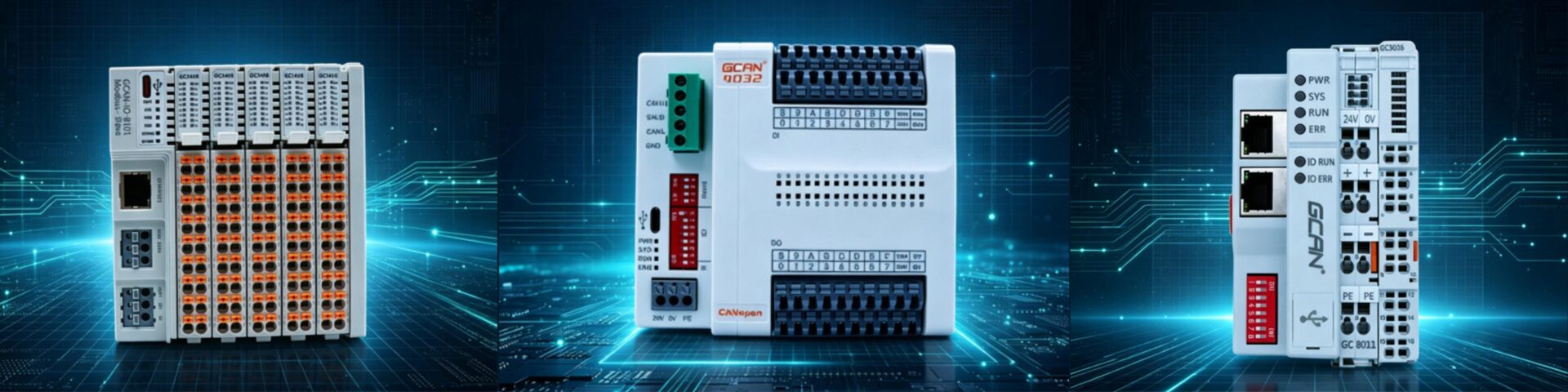
- The GCAN-I/O-4128 is an industrial-grade CAN/CANopen Remote I/O Module designed to highly expand digital signal acquisition and control capabilities over CAN networks.
- Compliant with standard CANopen protocols (CiA 301) and CAN 2.0A/B, it acts as a reliable slave node, supporting seamless integration with a wide range of PLCs, industrial controllers, and SCADA systems.
- Equipped with 1 CAN bus (dual terminal blocks), 4 Digital Inputs (DI), and 4 Digital Outputs (DO), it features 1500V DC electrical isolation and a wide operating temperature (-40°C to +85°C), ensuring robust data transmission in harsh industrial environments.
🔵 Critical Selection Guide: Expansion & Compatibility
- Before selecting your I/O modules, please note the hardware configuration features for your specific application:
- Protocol & Topology: Supports standard CANopen mode (Default NodeID: 1, Baud Rate: 500Kbps) and generic CAN mode. Note: The internal 120Ω terminal resistor is NOT integrated; if needed, add it externally between CAN_H and CAN_L.
- Wiring & Power: Pluggable screw terminals for easy wiring. Powered by 8~32V DC (24V standard recommended) with low power consumption (Max 140mA, silent state 40mA).
- I/O Capabilities: 4-Ch DI (High level 5~32V, Low level 0~2V) and 4-Ch DO (Rated output 100mA). The data mapping positions for each DI/DO channel are freely configurable via SDO commands.
- PLC Compatibility: Universally compatible as a CANopen slave or generic CAN node for almost all industrial controllers that support these protocols.
🔵 Core Application Scenarios & Solutions
💡 Scenario 1: Distributed I/O Expansion for Factory Automation
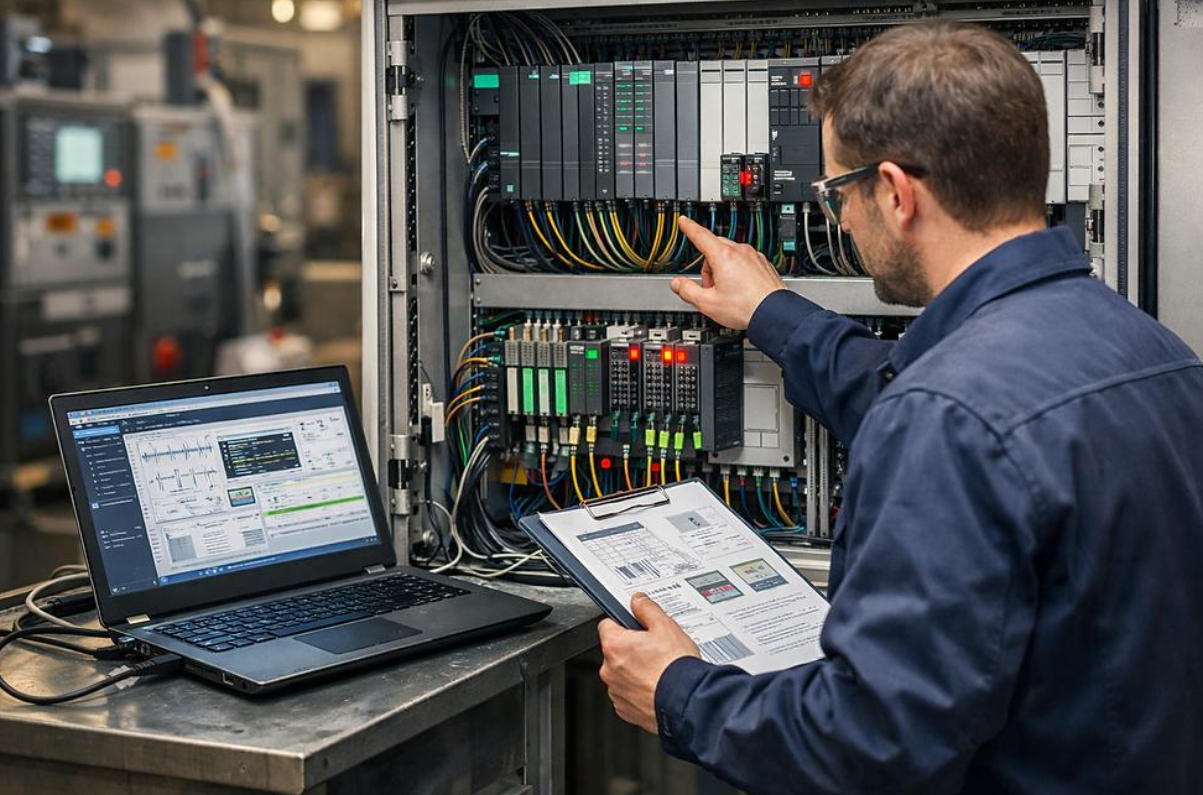
😟 The Challenge: Upgrading existing machinery or extending digital control points across large factory floors often requires running thick multi-core cables from field sensors back to the central PLC cabinet. This is expensive, labor-intensive, and prone to electromagnetic interference.
🖊️ The Solution: The GCAN-I/O-4128 is installed locally near the field sensors/actuators. It gathers digital inputs and controls outputs locally, transmitting data seamlessly to the central control system via a single isolated CAN bus cable. This drastically simplifies wiring and ensures highly reliable remote control.
💡 Scenario 2: Remote Monitoring in Harsh Environments (Mining & Oil Wells)
😟 The Challenge: In industries like coal mining or oil extraction, field equipment is often exposed to extreme temperatures, dust, and high electromagnetic interference. Sending personnel for frequent on-site monitoring is dangerous and inefficient.
🖊️ The Solution: With an industrial-grade design, a wide operating temperature range of -40°C to +85°C, and 1500V DC electrical isolation, the GCAN-I/O-4128 provides rock-solid reliability. It collects critical digital signals (like pressure switches or safety limits) in harsh zones and sends them safely to the surface control room via the CANopen network.
💡 Scenario 3: Intelligent Building & Access Control Systems
😟 The Challenge: Smart buildings require centralized control of distributed facilities, such as lighting, door access, and fire safety sensors. Connecting every single device directly to a central server creates an unmanageable web of cables.
🖊️ The Solution: The GCAN-I/O-4128 acts as a CAN network node on each floor or zone. It collects DI signals from door sensors and environmental monitors, and uses DO signals to control relays for lighting or electronic locks. Its compact size (78×31.5×26.5mm) allows it to be easily installed in space-constrained electrical cabinets or junction boxes.
💡 Scenario 4: Academic CANopen Training & Lab Testing
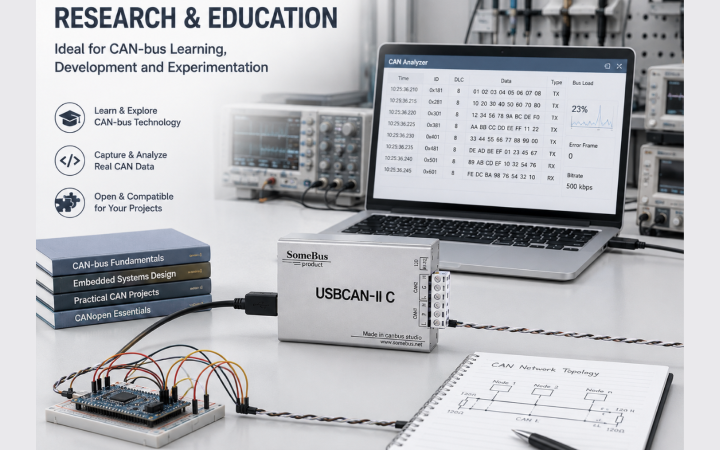
😟 The Challenge: Engineering students and R&D teams need a reliable, standard-compliant hardware node to practice and verify CANopen PDO/SDO configurations, NMT state switching, and data mapping.
🖊️ The Solution: The GCAN-I/O-4128 perfectly complies with the CiA 301 protocol. Users can easily configure the NodeID, baud rate, and freely map the DI/DO data positions via standard SDO commands. It provides real-time physical I/O feedback (LED indicators for DI/DO states), making it an ideal tool for industrial CAN education and protocol testing.
GCAN-I/O-4128: 4-Channel Digital Input & 4-Channel Output with 1500V Isolation
CANopen Remote I/O Module
4-Ch Digital Input & 4-Ch Digital Output for precise field control
Standard CANopen (CiA 301) and CAN 2.0A/B protocol support
Dual CAN bus interfaces with 1500V DC electrical isolation
Configurable DI/DO mapping positions via standard SDO commands
Wide 8~32V DC power input (24V standard recommended)
Industrial-grade reliability with operating temp. from -40°C to +85°C
Compact design with pluggable screw terminals for quick wiring
Find Your CANopen Remote I/O Solution by Application
◆ Application 1: My PLC or machine has run out of built-in digital I/O points, and I need a flexible expansion over the CAN network. (Keywords: CANopen I/O expansion, PLC retrofit, distributed control)
👉 Product model: GCAN-I/O-4128
💡 How it works:
➤ Role: Acts as a standard CANopen Remote I/O Slave node for industrial automation systems.
➤ Connection: Connects seamlessly to your main PLC or controller via the isolated CAN bus (CAN_H and CAN_L terminals). It can be daisy-chained with other CANopen devices across the factory floor.
➤ Data Processing: The master system simply reads DI status via TPDO and writes DO commands via RPDO. Parameters like Node ID, Baud Rate, and I/O mapping positions are easily configured using standard SDO commands without complex re-programming.
◆ Application 2: The sensors and switches are far away from the main control cabinet in harsh environments, and direct multi-core wiring is too expensive. (Keywords: remote CAN I/O, harsh environment data acquisition, isolated digital IO)
👉 Product model: GCAN-I/O-4128
💡 How it works:
➤ Role: Acts as a decentralized field-level I/O node for remote monitoring and control.
➤ Connection: Installed locally near the field sensors or actuators (e.g., in coal mines, oil wells, or large factory zones). Utilizes a single twisted-pair cable for CAN communication, significantly reducing cable costs.
➤ Signal Transmission: Field digital signals (High 5~32V, Low 0~2V) are collected locally. With 1500V DC electrical isolation and a wide operating temperature range (-40°C to +85°C), it ensures highly stable data transmission in noisy and extreme industrial environments.
◆ Application 3: Building an intelligent control system that requires centralized management of distributed lights, door locks, or access control panels. (Keywords: smart building CANopen, remote digital IO, automation integration)
👉 Product model: GCAN-I/O-4128
💡 How it works:
➤ Role: Acts as a compact, flexible digital control node for building automation.
➤ Connection: Its small size (78×31.5×26.5mm) and pluggable screw terminals allow it to be easily installed inside space-constrained junction boxes or electrical cabinets.
➤ Data Processing: 4-channel DI can be used to monitor door/window sensors or fire alarms, while 4-channel DO can be mapped to control relays for lighting or electronic locks, communicating directly with a central SCADA or HMI system.
Technical Specifications
Choose the Right Remote I/O for Your Application
| Model | Bus Protocol | Module Type | I/O Configuration | Signal Type | Terminal Type | Key Application / Feature |
| GCAN-4128 | CANopen / CAN | Compact (Micro) | 4 DI / 4 DO | Digital | Screw Terminals | Ultra-compact digital I/O for tight spaces; supports standard CAN & CANopen. |
| GCAN-4032 | CANopen | Compact | 16 DI / 16 DO | Digital | Spring-Cage | High-density digital I/O; ideal for standard 24V switch/actuator control. |
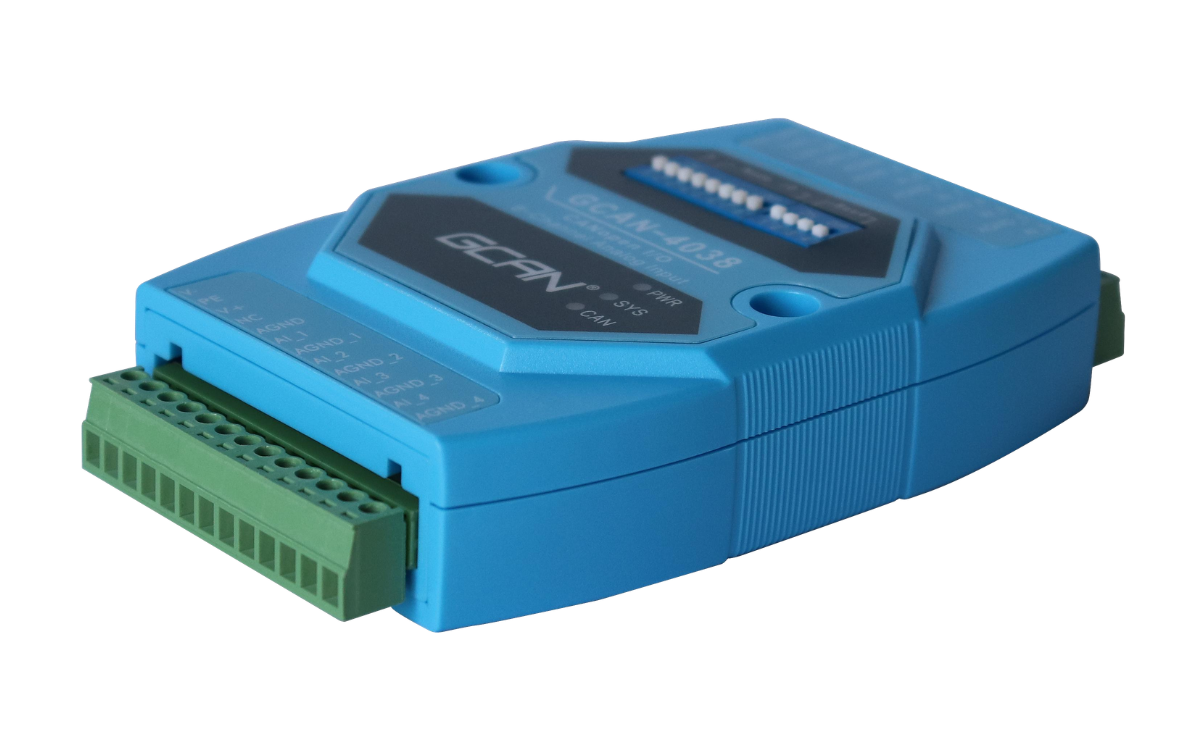
| GCAN-4038 | CANopen | Compact | 8 AI (Differential) | Analog | Screw Terminals | High-precision analog data acquisition (-10~+10V, -20~+20mA, etc.). |
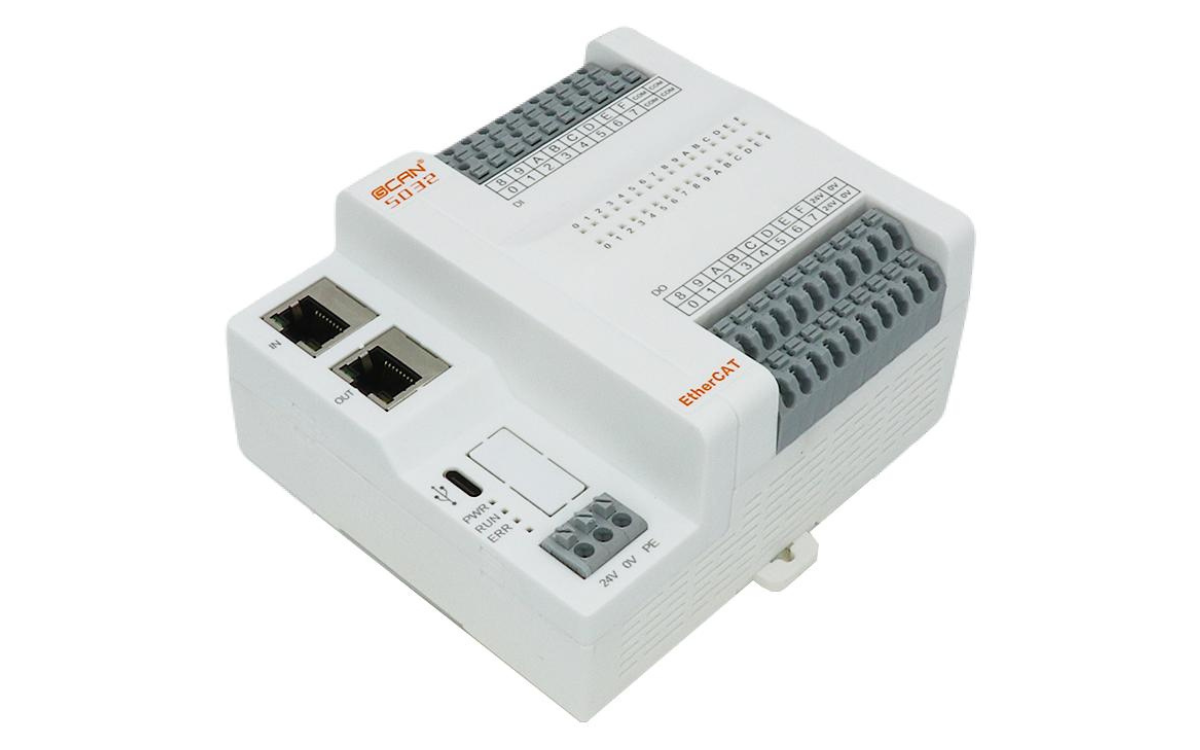
| GCAN-5032 | EtherCAT | Compact | 16 DI / 16 DO | Digital | Spring-Cage | High-speed real-time digital I/O for motion control and EtherCAT networks. |
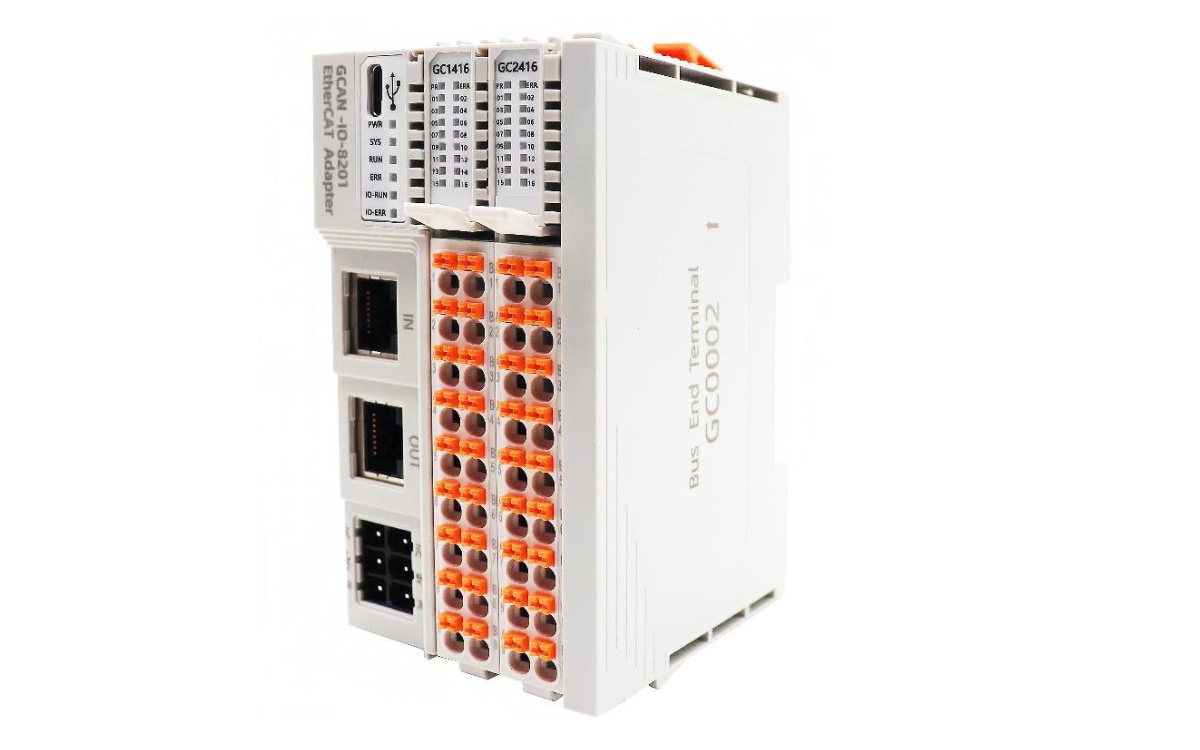
| GCAN-IO-8101 | Modbus TCP/RTU | Modular Coupler | Expandable (0 local I/O) | Mixed (via slices) | Spring-Cage (GC-Bus) | Head coupler for Modbus networks; supports up to 32 GC series I/O slices. |
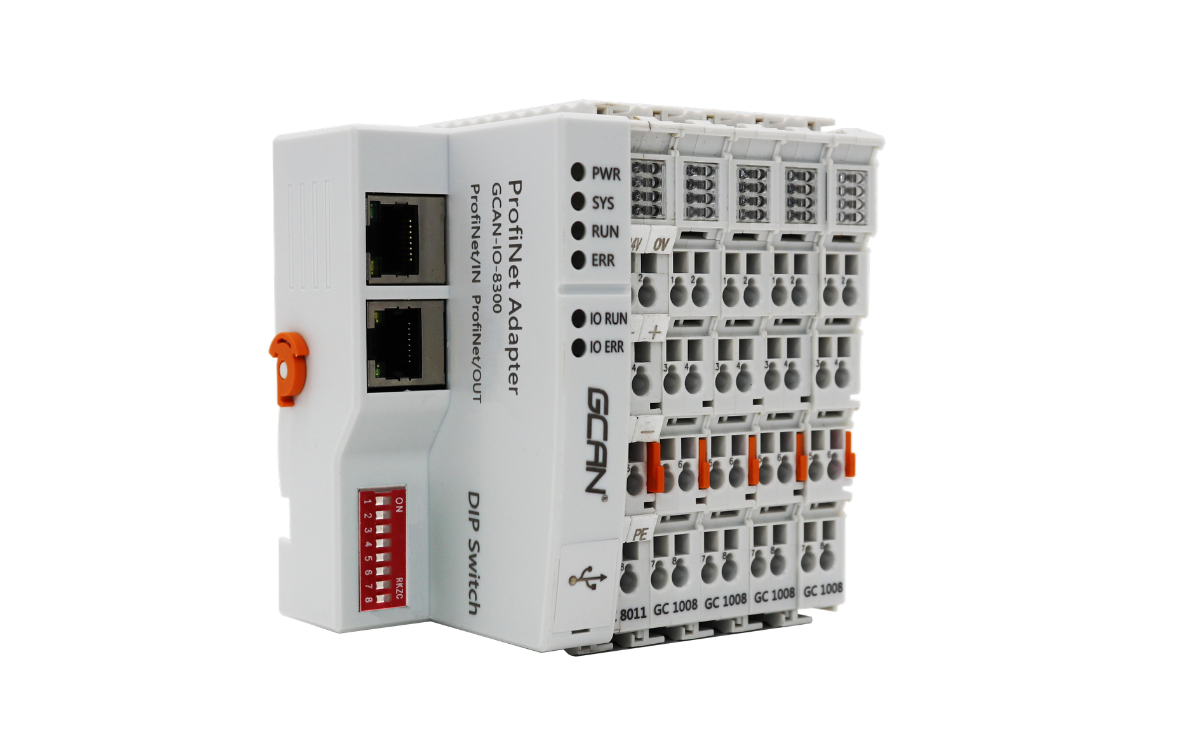
| GCAN-IO-8300 | Profinet | Modular Coupler | Expandable (0 local I/O) | Mixed (via slices) | Spring-Cage (GC-Bus) | Pure Profinet coupler for Siemens PLCs; max 340 bytes IN/OUT, up to 32 slices. |
GCAN-I/O-4128 CANopen Module: Setup, Wiring, and Troubleshooting FAQs
Q Is the GCAN/I/O/4128 compatible with my existing PLC and SCADA system? ▼
Yes. The GCAN/I/O/4128 is a standard CANopen (CiA 301) Slave device. As long as your PLC (e.g., Siemens, Beckhoff, Omron, Schneider), SCADA, or HMI acts as a CANopen Master, it can seamlessly communicate with this module via the CAN bus. No proprietary drivers are required.
Q How do I change the Node ID and Baud Rate since there are no hardware DIP switches? ▼
- You must configure these parameters via SDO (Service Data Object) commands from your master.
- For Node ID, write to Index 0x2407 (Default: 1).
- For Baud Rate, write to Index 0x2408 (Default: 500Kbps).
- Please note: You must power cycle the module after configuration for the new settings to take effect.
Q Why is my CAN communication unstable, and do I need a terminal resistor? ▼
The GCAN/I/O/4128 does NOT have an integrated 120Ω terminal resistor. If this module is the physical end node on your CAN network, you must manually connect a 120Ω resistor between the CAN_H and CAN_L terminals to eliminate signal reflection. If it is a middle node, leave it unconnected.
Q How is the DI and DO data mapped to the CANopen PDOs? ▼
By default, TPDO1 (ID 0x180 + Node ID) is used for DI status, and RPDO1 (ID 0x200 + Node ID) is used for DO control. The module features highly flexible mapping. You can use SDO commands (Index 0x2404 for DI, 0x2403 for DO) to map any channel to a specific bit position (up to the 64th bit) to match your PLC data structure perfectly.
Q The DO outputs suddenly stop working after a few seconds in CAN mode. How to fix it? ▼
In raw CAN mode, the default DO timeout is 2000ms (2 seconds). The module will automatically stop outputting if it does not receive a control command within this window. To maintain continuous output, ensure your master sends CAN frames at intervals shorter than 2 seconds. You can also disable or extend this timeout via SDO (Index 0x2401).
Q Can the 4 digital outputs directly drive inductive loads like solenoid valves? ▼
The digital outputs (DO) have a rated current of 100mA per channel. While sufficient for small sensors or indicators, it is not recommended to drive inductive loads directly. You must use an external intermediate relay or a flyback diode to protect the module from voltage spikes and overcurrent damage.
Q Is the PDO mapping of GCAN-IO-4128 flexible for small nodes? ▼
Yes. The 4DI/4DO channels have clear default PDO mappings, making it truly plug-and-play. If needed, the position of each DI/DO in the PDO can also be freely configured via SDO.